
Preparing for the CBAM: What Importers and Exporters Need to Know
The EU’s Carbon Border Adjustment Mechanism (CBAM) represents a landmark policy to safeguard EU climate ambitions and industry competitiveness by addressing carbon leakage. CBAM imposes a carbon price on imports of energy-intensive goods, reflecting the price paid under the ETS.
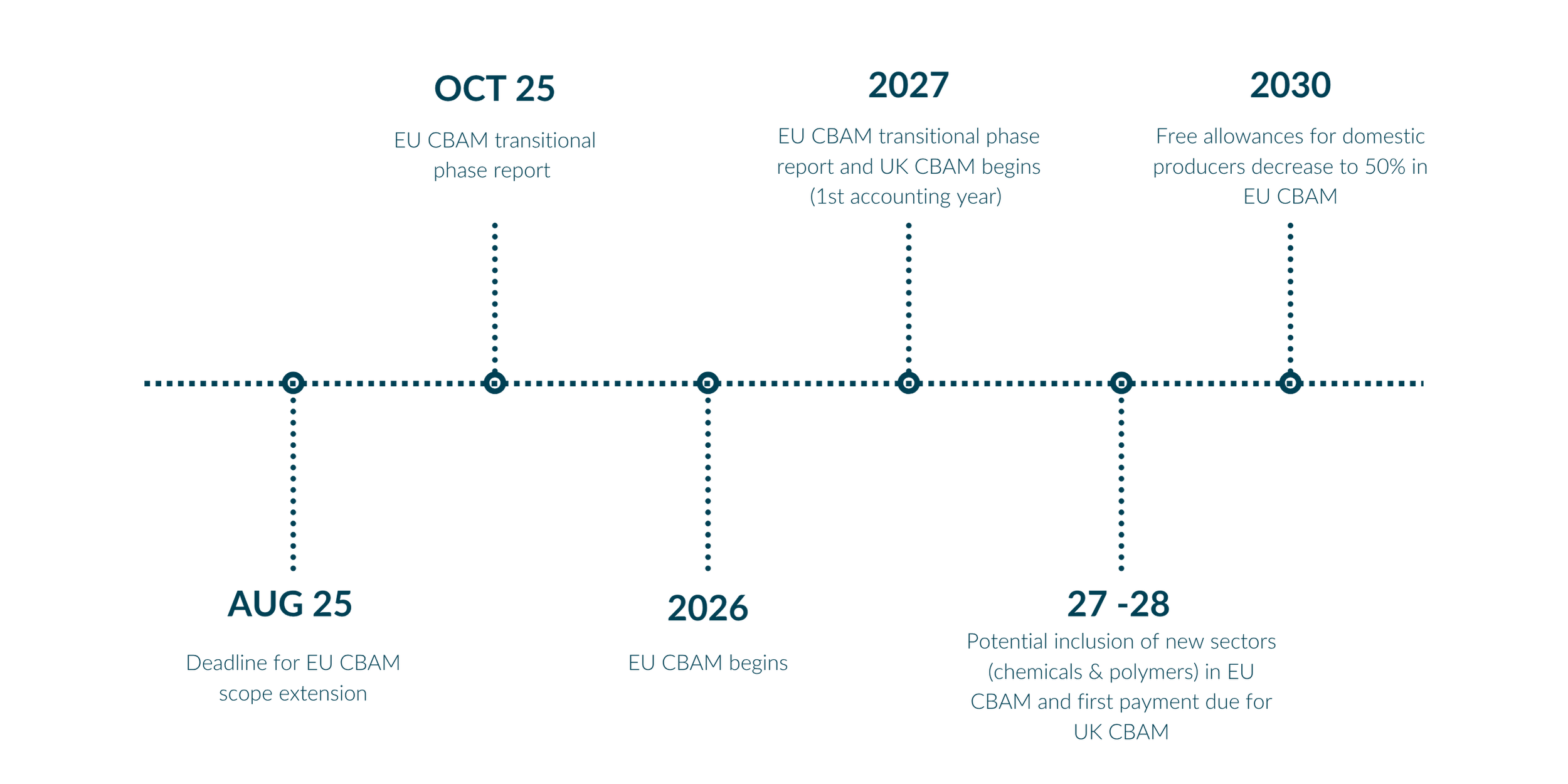
A timeline illustrating key dates for EU and UK CBAM
What You Need to Know
Effective Date: CBAM launches in 2026 for selected goods such as steel, cement, and electricity.
Key Obligations: Importers must report and buy CBAM certificates equivalent to the embedded carbon emissions in their goods, purchasing and surrendering them annually, with adjustments for carbon costs already paid abroad.
Scope: EU CBAM currently covers cement, iron & steel, aluminium, fertiliser, hydrogen and electricity (currently in scope for reporting only, not financial obligations).
Working Alongside EU ETS: CBAM is structured to run in parallel with the EU ETS (from 2026 to 2034). During this period, free allocations under the ETS will be phased out, pushing carbon pricing to reflect real market dynamics.
Supply Chain and Financial Impacts
CBAM compliance requires accurate calculation of embedded emissions, reliable data reporting, and certificate acquisitions, introducing operational complexity and potential cash flow challenges. Preparing early enhances competitiveness by avoiding disruptive costs and reputational risks.
Emerging Developments to Watch
The scope of CBAM will likely expand post-2026 to include additional goods and sectors.
Global dialogue around carbon pricing harmonisation is intensifying, which may ease compliance.
Digital reporting tools and EU registries will standardise and simplify CBAM processes.
UK CBAM: Preparing for a Parallel Regime
The United Kingdom is developing its own Carbon Border Adjustment Mechanism (UK CBAM), set to take effect from 2027, one year after the EU’s implementation. The UK framework will mirror many EU CBAM principles, but will apply to imports into the UK market.
Key Features:
Start Date: 2027 (initially covering iron, steel, aluminium, fertiliser, ceramics, glass, and cement).
Objective: To prevent carbon leakage and ensure a level playing field for UK producers operating under the UK ETS.
Mechanics: Importers will be required to report and pay for the embedded emissions of eligible goods, with adjustments made where a credible carbon price has been paid in the exporting country.
Alignment: The UK government has expressed its intention to align reporting and verification standards closely with those of the EU to ease administrative burdens for firms active in both jurisdictions.
The UK CBAM, while developed independently, signals the growing global momentum toward border carbon pricing. Businesses trading both in and out of the UK will need to prepare their data and compliance systems early to accommodate dual reporting under the EU and UK frameworks.
Grey Epoch’s CBAM Support
By partnering with Grey Epoch, you can secure early EUA and UKA purchases to hedge expected CBAM-related costs across both the EU and UK regimes. We help you adapt procurement strategies to favour lower-carbon suppliers, successfully minimising compliance exposure under dual reporting requirements.

